Concrete Curbing vs Other Landscape Edging
Concrete, steel, pavers, stone, wood and rubber all make borders. Each has strengths. Here is how to choose.
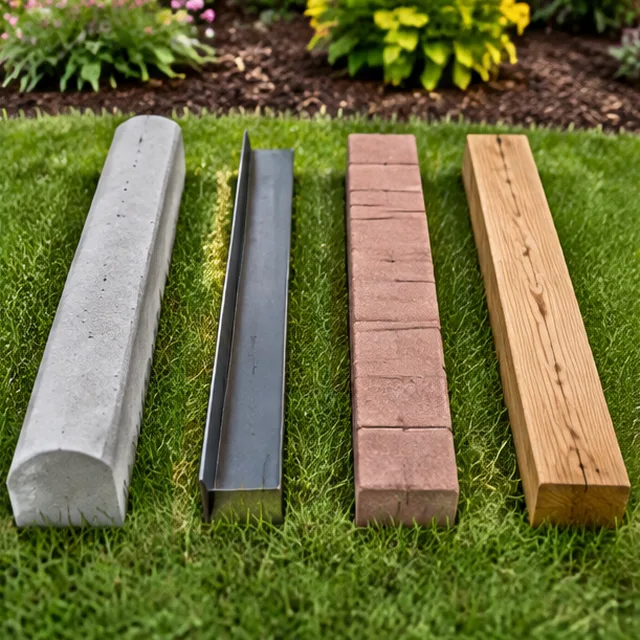
Concrete curbing
Concrete curbing is a continuous, strong band with no gaps, available in color and pattern. It holds deep mulch, stops creeping grass at the surface and lasts many years with sealing. It is a permanent choice, so plan the line carefully.
Metal edging
Steel and aluminum give a thin, crisp line that fades into the lawn. They suit modern gardens and tight curves, and they are quick to install. They hold less mulch than concrete and can bend if they are hit hard.
Pavers, stone and brick
Pavers, natural stone and brick make handsome, traditional borders. They take longer to install and can shift without a good base. Gaps between pieces can let weeds in unless they are set tightly.
Wood, rubber and plastic
Wood is warm and works well for raised beds, but it rots in time. Rubber and plastic are inexpensive and flexible, so they suit temporary or informal borders.
How to decide
Think about how long you want it to last, how deep your mulch is and how much you mow beside it. Our profile finder helps with the concrete options, and we are happy to talk about alternatives.
Mistakes to avoid
- Choosing the lightest edging for deep mulch beds
- Using wood where it will sit in wet soil
- Picking a very bright color without testing
- Ignoring how the edge will be mowed
Concrete Curbing vs Other Edging: questions
Which edging lasts longest?
Concrete, steel and stone all last many years. Wood and plastic are shorter-lived.
Can I mix edging types?
Yes. Many yards use concrete in front and lighter edging in back.
Put this guide to work
Tell us about your yard. We reply with a clear next step and a free estimate.